Fussy eating in babies
When food refusal is normal exploration and when it needs a closer look. For babies in the weaning year and the early toddler stretch, from a paediatric dietitian with experience across the spectrum of infant feeding.






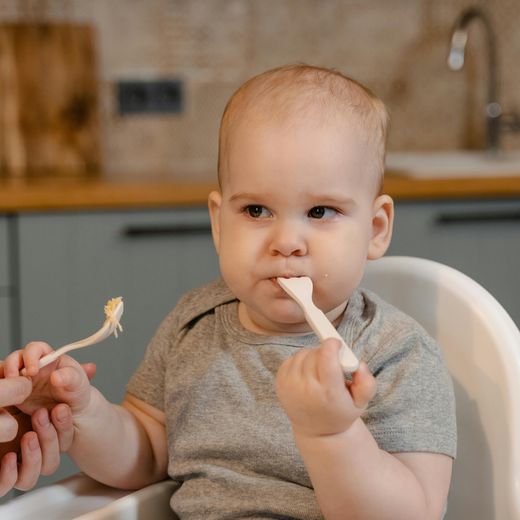




What's actually going on with fussy eating
Babies who refuse a previously liked food, pull faces at new tastes, spit things out, or only accept a narrow range of foods are usually doing entirely normal developmental things. Food neophobia, the wariness of new foods, is a built-in evolutionary trait that peaks around 12 to 18 months as toddlers start asserting independence. It's not fussiness in the problem sense. It's growing up.
What I look for as a clinician is the difference between normal fluctuation and genuine restriction. Normal fussy eating comes and goes. A baby might reject peas on Monday and eat them happily on Thursday. The overall diet remains reasonably varied when you look at it across a week rather than meal by meal. The baby is growing well and is generally healthy.
What's less normal: persistent refusal of entire food groups or textures, real distress at mealtimes rather than just disinterest, a diet that's actively narrowing over time rather than fluctuating, or feeding difficulties that are leaving growth or nutritional status behind. These patterns warrant an assessment rather than the standard reassurance of 'they'll grow out of it'.
The role of repeated exposure
Research consistently shows, as noted by the NHS Start4Life programme, that babies and young children may need 10 to 15 exposures to a new food before accepting it. An exposure doesn't have to mean eating the food. It can be seeing it on the plate, touching it, smelling it, or watching someone else eat it. Pressure to eat, on the other hand, tends to make fussy eating worse rather than better.
Research suggests that families who do best with fussy eating are the ones who can stay calm and consistent. Offering a variety of foods without pressure, eating together as a family where possible, and not making food refusal into a battle. Easier said than done when you're exhausted and worried about whether your baby is eating enough, I know. But the evidence on this is genuinely clear: pressure backfires.
The 'division of responsibility' approach is an evidence-based framework that can take the power struggle out of mealtimes. A consultation covers how to apply it practically in your family's situation.
Fussy eating after breastfeeding or bottle feeding
Some babies are fussy around feeds themselves rather than around solid food. A baby who is unsettled, crying, arching, or pulling away during or after breast or bottle feeds may not be 'fussy' in the behavioural sense at all. There's often a physical driver: reflux, cow's milk protein allergy, a latch issue, fast or slow milk flow, wind, or overstimulation.
It's common for parents to be told their baby is just 'colicky' or 'fussy' when there's actually an identifiable and manageable cause underneath. If your baby is consistently distressed around feeds, particularly if there's vomiting, arching, stool changes, eczema, or poor weight gain alongside the fussiness, a proper feeding and dietary assessment can help identify what's going on. This is exactly the kind of feeding and dietary assessment that a paediatric dietitian does.
Textures, gagging, and food progression
Moving through textures is an important part of the weaning journey, and some babies find it harder than others. Gagging on new textures is normal and protective. It's a reflex that helps prevent choking. But persistent gagging, retching, or vomiting with textured foods beyond the first few weeks of weaning, or a baby who is stuck on smooth purees well past 9 to 10 months, may have an oral motor or sensory issue that needs looking at.
The window for introducing lumps and textures is around 6 to 9 months. Research suggests that babies who aren't offered lumpy foods by 9 to 10 months may have more difficulty accepting textures later. This doesn't mean you need to panic if your baby is a bit behind, but it does mean that persistent texture refusal is worth addressing rather than waiting and hoping.
When to get a professional assessment
I'd recommend seeking an assessment if your baby is accepting fewer than 10 to 15 different foods, refusing entire food groups, distressed at mealtimes, gagging persistently on age-appropriate textures, refusing solids past 8 months, losing weight or not gaining well, or if mealtimes have become a significant source of stress for the whole family.
Addressing feeding patterns early can sometimes be more straightforward than waiting until they are well established. A dietetic assessment looks at what your baby is actually eating, whether it meets their nutritional needs, what might be driving the fussiness, and what practical changes could help. It's often more reassuring than parents expect, because sometimes the eating is actually better than it feels in the moment.
Common questions
A clear plan,
built around your little one.
All consultations are online and you can self-refer directly. You'll receive a written plan after every appointment.
Thorough assessment & plan
Your first appointment is 60 minutes. It includes a full clinical and dietetic assessment, and you'll receive an agreed, written plan to take away.
Review & adjust
Follow-ups are 30 minutes. We review the plan, problem-solve anything that's come up, and adjust guidance as your child progresses.
Currently self-pay only. All fees are VAT-exempt as registered healthcare services. I provide receipts with my HCPC registration details which you can submit to your insurer.